
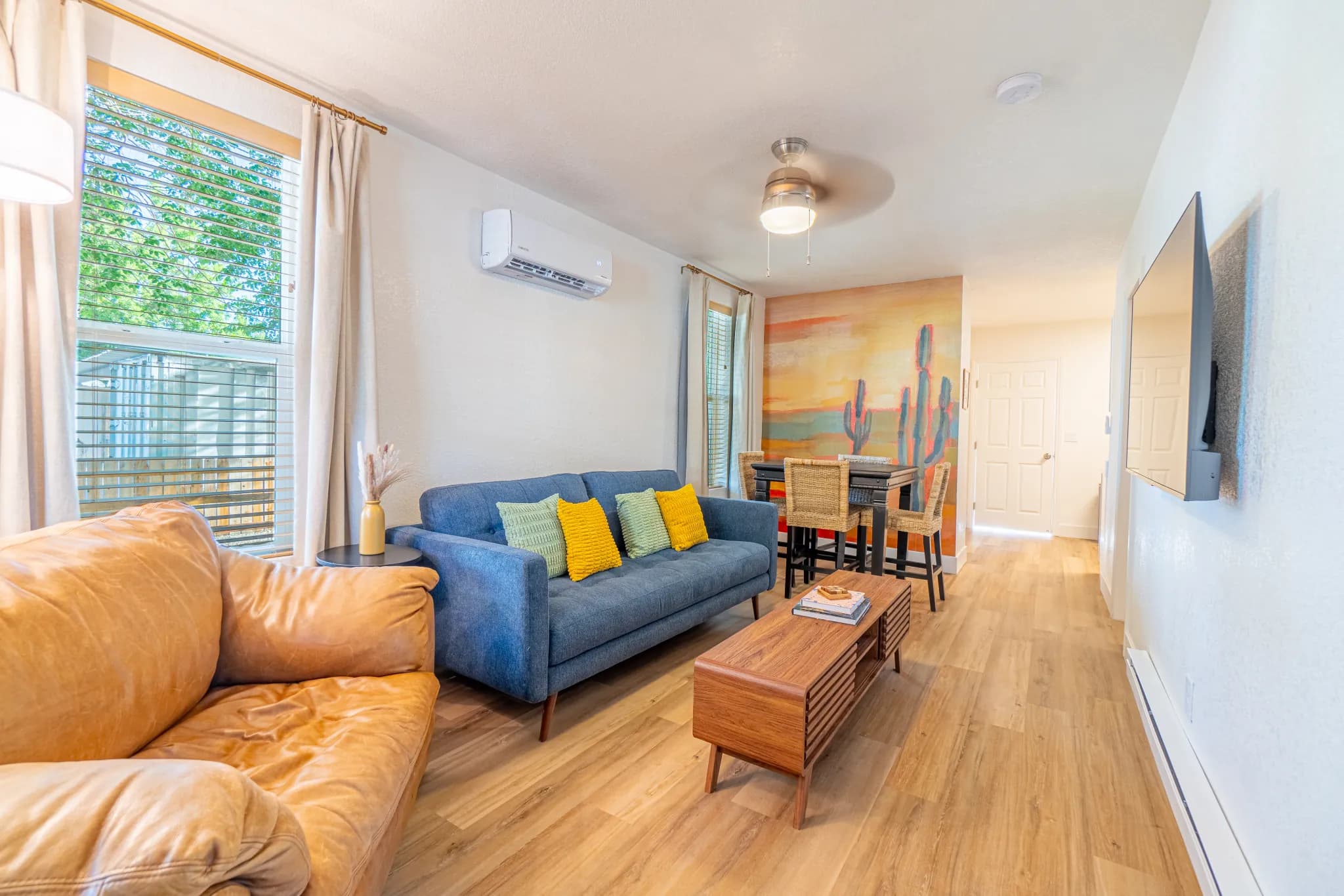

Every photo in this article is a room we furnished. The befores are real too: empty walls, stained carpet, a lone loveseat pushed against a brown wall. I’m showing you our own work in Reno because furnishing advice without pictures is just adjectives, and because the pairs make the argument better than I can. A vacation rental is not decorated. It is furnished to do three jobs: win the click in search results, sleep the number your permit allows, and survive strangers. Everything below serves one of those three.
Furnishing is a revenue decision, not a decorating one
A guest scrolling a booking platform gives your hero photo a blink, maybe two, before deciding whether to tap. That photo is a picture of furniture. Not of your square footage, not of your neighborhood, not of the mountain twenty minutes away. Furniture. The rooms you’re about to see went from unrentable to photographable without an addition, a permit, or a wall moving, and that is the point of this whole playbook: furnishing is the physical change with the biggest payoff per dollar most owners will ever make to a rental, and most owners treat it as a shopping trip.
Here’s the clearest example we have. One empty room at our Tarn Street project in Reno, a complete renovation we finished in June 2025, became three usable zones: a round dining table that seats four, a seating group built for conversation, and counter stools at the opened-up kitchen pass-through.

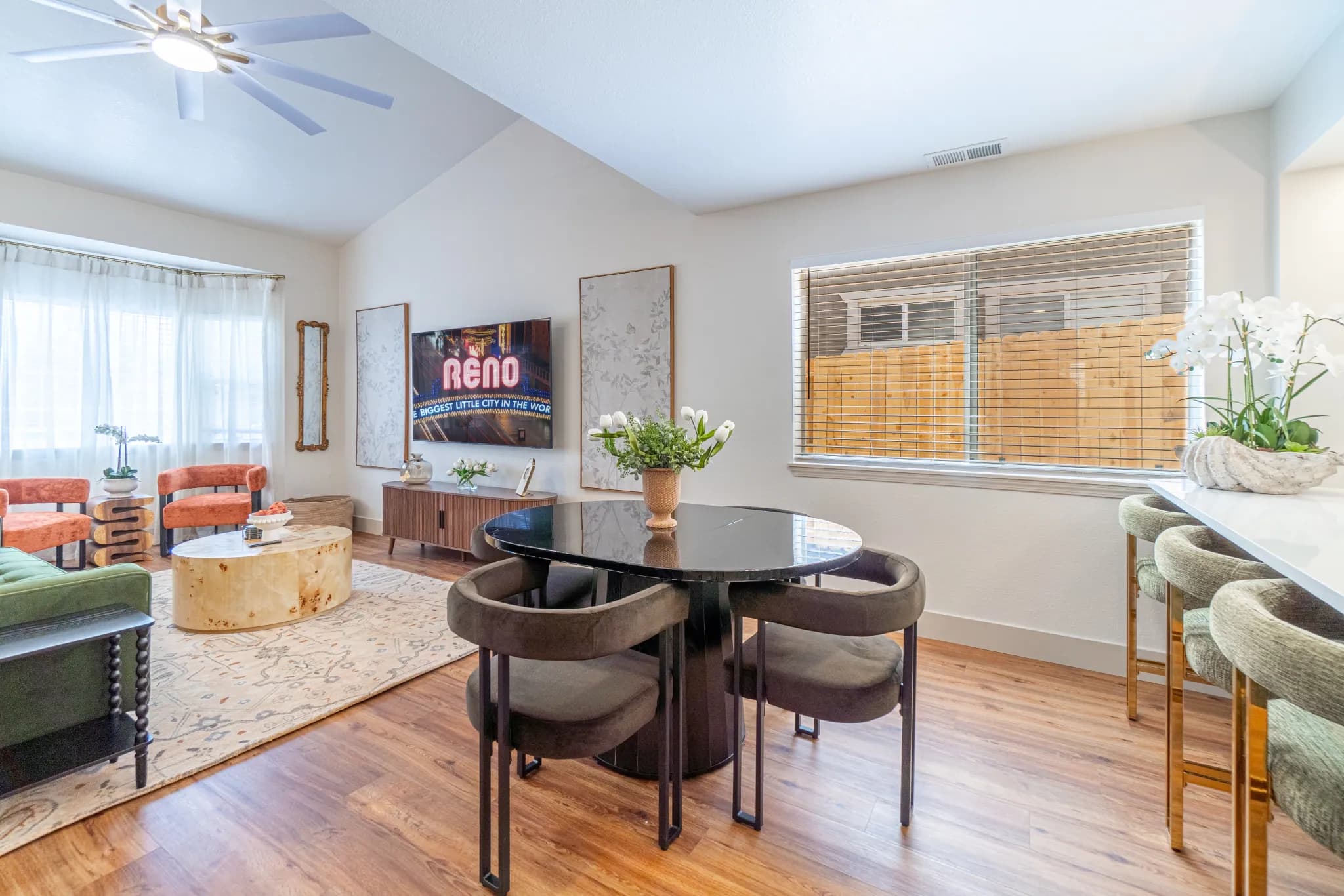
Notice what the furniture is doing. The dining table converts floor area into a listed amenity, dinner for four. The sofa and chairs face each other, not a wall, so the room photographs as a place people talk. The stools turn a counter into overflow seating. None of that existed in the before, and the square footage never changed. When you plan a room, name its zones first and buy for the zones. An empty great room is not one furnishing decision. It is three.
Sleeping capacity: the permit sets the ceiling, the furniture earns it
Before you buy a single bed, read your permit. Around Reno and Tahoe, occupancy limits are conditions of the short-term rental permit itself, and each jurisdiction writes its own, commonly as a formula tied to bedroom count. Our Reno and Washoe County regulations guide walks through how those limits work locally, and our 2026 rules overview covers the rest of the region. Furnishing past your permitted occupancy doesn’t earn you anything. It advertises a violation.
Within the ceiling, though, fight for every real bed, because sleeping capacity is the single listing attribute that most directly moves what a night is worth. The operative word is real. An air mattress in a closet is not capacity, it’s an apology. The harder problem is the room that seems too small for proper furniture at all, and this bedroom at Litch Court, a two-bedroom design and furnishing project we completed in July 2024, is my favorite answer to it.

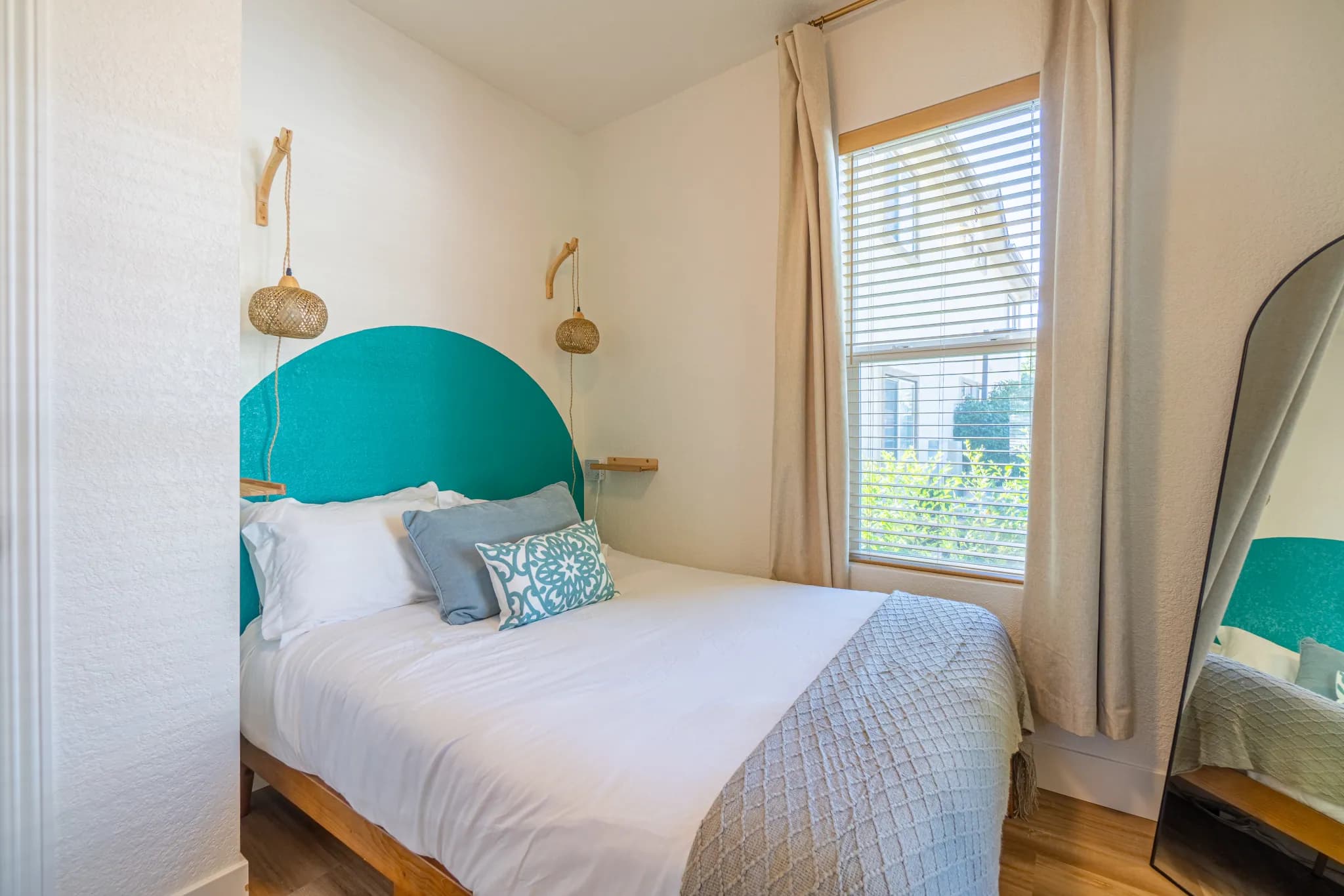
The room couldn’t take a real headboard plus two nightstands with lamps, so we painted the headboard on the wall and hung the bedside lighting from hooks. A teal arch, two plug-in rattan pendants, floor-length curtains, a leaning mirror. The full queen stays, which means the real sleeping capacity stays, and the room gained a focal point that photographs like a much larger space. Cost of the trick: a quart of paint and two pendants. Small rooms do not need smaller beds. They need furniture that gets off the floor.
What durable actually means
Guests are not careless people. They are people on vacation, which is a different thing: red wine on the sofa at eleven, roller bags into door frames, a toddler with a yogurt pouch and ambitions. Durable doesn’t mean ugly or industrial. It means every surface assumes the worst night of the year and shrugs. The specifics:
Seating: performance fabric or leather, nothing precious
Guests eat on the sofa. Buy upholstery rated for it: performance weaves, leather, or slipcovers that unzip and survive a washing machine. A pale boucle sofa is a countdown clock.
Frames: solid wood or metal, never particleboard
Particleboard beds work loose by the twentieth turnover and can't be re-tightened. A solid frame costs more once. The flat-pack one costs less, twice.
Rugs: mid-tone, patterned, and one size larger than you think
A pattern hides the wine. A mid tone hides the trail from the door. And a rug that ends before the furniture does makes the whole room photograph smaller.
Beds: protectors under everything, two linen sets per bed
Commercial-grade mattress and pillow protectors, always. Two full linen sets per bed means a stain becomes a swap, not a blocked same-day turnover.
Walls: scuffable paint and art that is screwed down
Luggage finds corners. Choose a finish that wipes, keep a labeled touch-up quart on a closet shelf, and hang art on proper anchors, not adhesive strips.
Breakables: buy the spares on day one
Dishes, glasses, lamps, the shower curtain rings. Buy extras of each while the line is still in stock. Sets stop matching the year a piece is discontinued, not the year it breaks.
One spending rule organizes all of it: put the money where guests put their bodies. The mattress, the sofa, the shower, the main bed linens. Those four drive reviews, and reviews drive rank. A cheap mattress under expensive styling is a one-line review waiting to be written, and it will mention the mattress, not the styling.
The rooms that decide the booking
Three rooms do almost all the selling: the main living space, the primary bedroom, and the kitchen. Guests judge the living room for the daytime, the bedroom for the night, and the kitchen for whether the trip will require restaurants three times a day. Every one of them should be furnished with its photo in mind, because the photo is where the room will do its work. Start with the bedroom, since sleep is the product a rental actually sells. This is the primary at Tarn Street, same room, both shots.

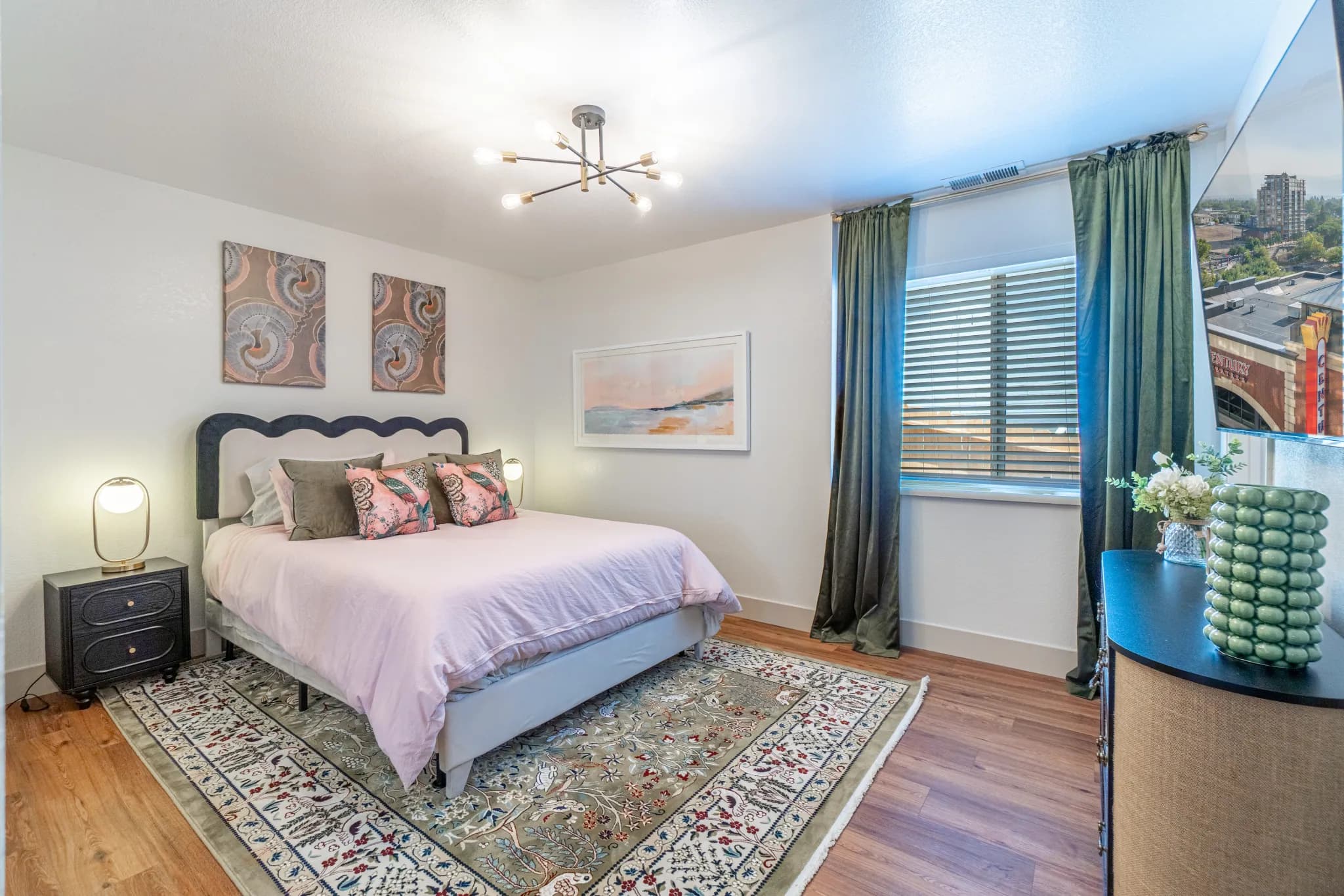
The formula in that after is worth stealing whole. A rug sized to extend well past the bed. Blackout drapes hung floor to ceiling instead of the short cafe curtains in the before, which read as rental in the worst sense. A lamp lit on each side of the bed. A layered stack of pillows that says someone made this bed for you. The room reads as comfort in a photo, and it earns the phrase every listing wants in its reviews: “great sleep.”
In the living room, the most common furnishing mistake is not style. It is scale. Our Columbus Way Estate project, a three-bedroom transformation we completed in February 2023, started with the classic version of the problem: one undersized loveseat against the wall of a room meant to seat six.
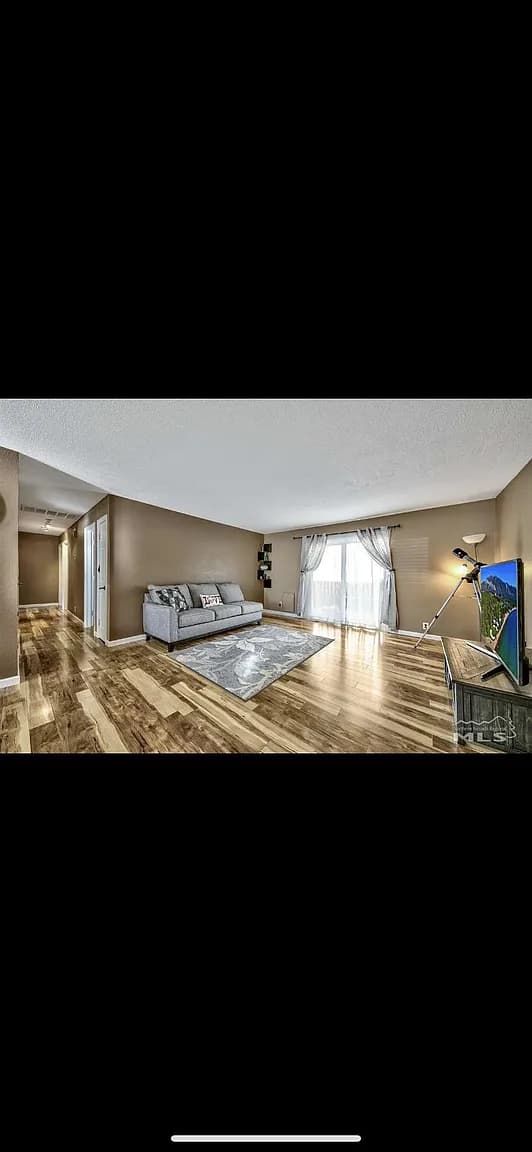
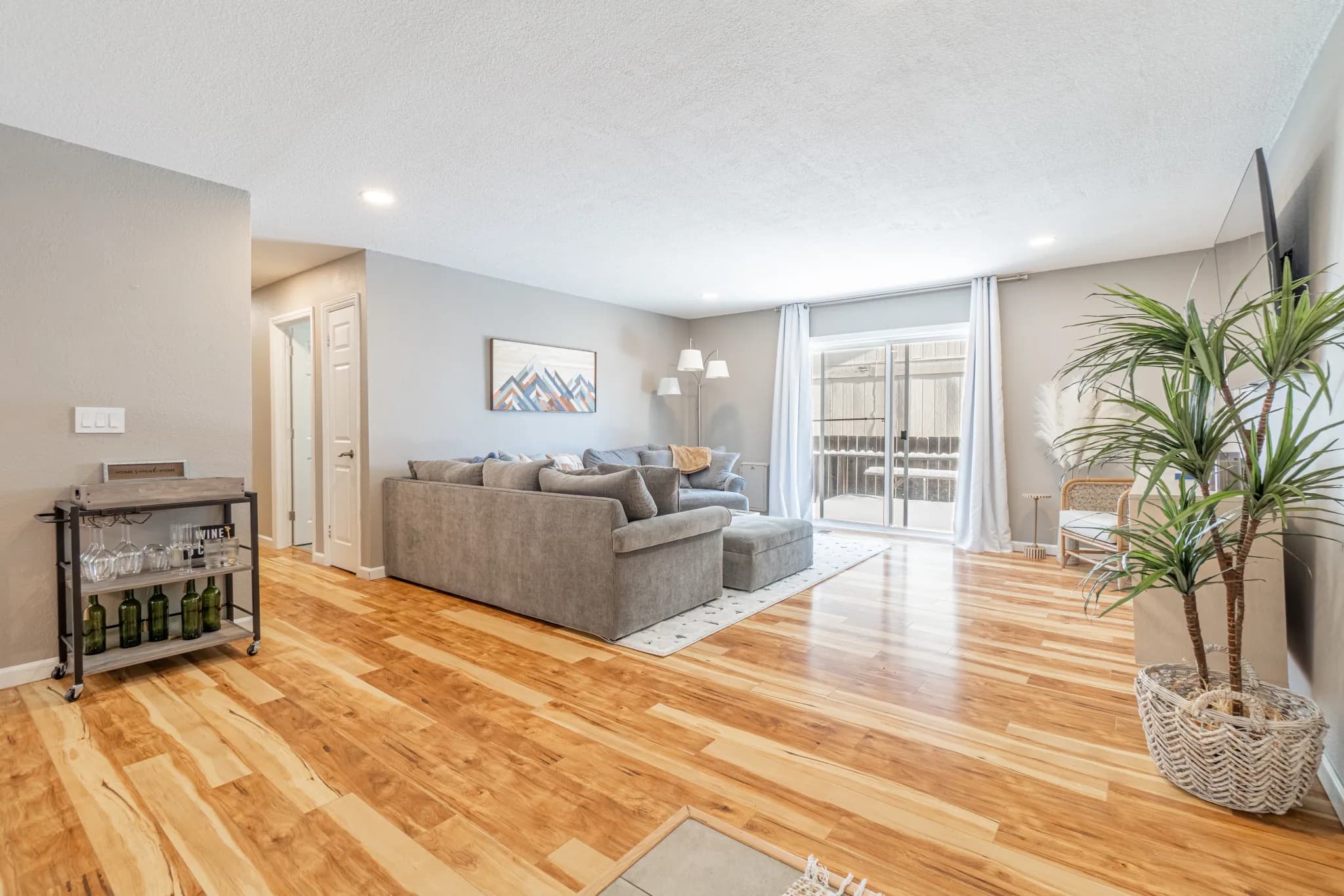
Same room, same window, same floor. The sectional actually seats the guest count the house sleeps, it floats on a rug large enough to hold the whole seating group, and the walls went from brown to a warm greige that gives the camera light to work with. Undersized furniture doesn’t make a room look bigger. It makes a room look like nobody committed to it. Buy to the guest count, then check the tape measure, in that order.
The kitchen sells differently. Nobody books for a spice rack, but plenty of guests scroll past a kitchen that looks bare. Outfit it to a test, not a list: two people should be able to cook a real dinner and serve it without opening a drawer and finding nothing. Sharp knives, a full cookware set, a coffee setup worth photographing, and enough of everything that the dishwasher can be full and dinner still happens.
The Tahoe layer: furnishing for winter guests
Everything above applies anywhere. Owners in Truckee, Incline Village, and the Tahoe basin have one more layer, because winter guests arrive wet and carrying gear. A boot tray and bench inside the door, wall hooks for jackets at every entrance, a rack or designated wall for skis and boards where they can’t fall on a child or a car, and a doormat regime that takes the beating so the floors do not. Blackout drapes stop being a nice touch and become mandatory: snow reflects morning light, and a guest who paid for a ski vacation still wants to sleep past dawn.
Two cautions from the operations side. First, gas and propane fireplaces are a furnishing amenity with a maintenance contract attached: have them serviced, keep carbon monoxide alarms current, and give guests one laminated card of instructions instead of letting them improvise. Second, space heaters are how owners solve a furnishing-season heating complaint and how houses burn down. Fix the heat, do not furnish around it. The rest of the cold-weather list, from pipe protection to snow contracts, lives in our Tahoe winterizing checklist.
Buy once: the method that avoids furnishing twice
Most furnishing budgets are not blown on expensive taste. They are blown on buying twice: the sofa that did not fit, the bed that arrived in a different white than the dresser, the room that never quite worked and got redone in year two. The defense is sequence, not spend:
Measure everything, then draw it
Every wall, window, doorway, stair turn, and outlet. A floor plan with the furniture drawn in at scale is the cheapest mistake-catcher in this whole project. The sofa that won't make the stair turn is a tape-measure discovery or a delivery-day one.
Design the whole house on paper before buying anything
Pick the palette, the anchor pieces, and the one bold move per room while everything is still returnable, which is to say imaginary. Buying room by room over months is how a house ends up with four accent colors and no point of view.
Order in one wave
Place the whole order across vendors inside the same week so lead times overlap instead of stacking. The goal is one delivery window, one assembly push, one photography day. A rental that furnishes over three months is empty for three months.
Assemble, stage, then photograph before anyone sleeps there
The photos are the product. Shoot the house styled and untouched, because that set of images works for years and a phone snap taken between guests never looks like this article's after shots. They were taken by a professional, on purpose, before opening night.
When to hire it out
I’ll be straight about the interest I have here: furnishing rentals is a service Duvoire sells, and the projects in this article, Tarn Street, Litch Court, and Columbus Way, are our portfolio. So take the sales pitch as read and keep the honest version of the decision. Do it yourself when you have the time, the truck, and a clear eye for what photographs well. Hand it off when speed is worth more than the fee: a coordinated design, one order wave, one assembly push, and a professional shoot get a home listed weeks sooner than furniture arriving one box at a time, and an empty week is revenue that never comes back. Either way, judge any designer, us included, by their before-and-afters, not their mood boards.
And whichever route you take, finish the job. A rental that is ninety percent furnished photographs zero percent done. The last ten percent, the art on anchors, the styled shelves, the made bed with the throw, is the part the camera sees.
Frequently Asked Questions
How much does it cost to furnish a vacation rental?
There is no honest single number, and I am wary of anyone who gives you one before seeing the house. The cost is driven by four things: square footage and room count, the sleeping capacity you are furnishing to, the quality tier you buy at, and how much of the work you do yourself. A studio furnished to sleep two is a different project from a three-bedroom furnished to sleep eight with a garage game room. The method matters more than the budget: measure first, plan every room on paper, buy in one coordinated order, and put your money into the pieces guests touch all day, the mattress, the sofa, and the shower, before you spend on decor.
Can I furnish a vacation rental with furniture I already own?
Some of it, if it earns its place. The test is not whether a piece is nice, it is whether it photographs well, survives strangers, and fits the room's job. Solid wood dressers and dining tables usually pass. A worn sofa, a mattress with years on it, and anything fragile or irreplaceable usually fail. Mixed hand-me-downs also tend to read as a rental furnished from leftovers in the listing photos, which is exactly the impression that suppresses bookings. Keep the survivors, sell the rest, and design the room around what stays.
How many people should my vacation rental sleep?
Start with your permit, not your square footage. In the Reno-Tahoe area, occupancy limits are written into short-term rental permits, and jurisdictions set them differently, often as a formula tied to bedroom count. Furnish up to the number your permit allows and stop there. Advertising sleeping capacity beyond your permitted occupancy invites complaints and enforcement. Within that ceiling, real beds beat air mattresses every time: a quality sleeper sofa or a daybed counts as sleeping capacity guests will pay for, an air mattress in a closet does not.
What furniture holds up best to short-term rental guests?
Pieces that assume the worst night, not the average one. Performance fabric or leather on seating, removable and washable covers wherever they exist, solid wood or metal frames instead of particleboard, and rugs in mid-tone patterns that hide a dropped glass of red. Buy commercial-grade mattress protectors and two full sets of linens per bed so a stain never blocks a same-day turnover. And buy spares of everything breakable at the start: dishes, glasses, lamps. The discontinued glass you cannot re-buy in year two is why sets stop matching.
Should I hire a designer to furnish my vacation rental or do it myself?
Do it yourself if you have the time, a truck, and an eye you trust, plenty of owners do. Hire it out when the math favors speed: every week a rental sits empty while furniture trickles in is revenue gone, and a furnishing project run in one coordinated wave can be photographed and listed weeks sooner. Duvoire designs and furnishes rentals across Reno, Tahoe, and Truckee, and every before-and-after photo in this article is our own work, so look at the portfolio and judge for yourself whether the result is worth handing off.
Want Rooms That Look Like These Afters?
Duvoire designs, furnishes, and photographs rentals across Reno, Tahoe, and Truckee, then manages them. Ask for a free consultation and we’ll talk through your specific home, not a package.

Founder & CEO, Duvoire Property Management
Michael is a Reno-Tahoe property owner and hospitality expert who founded Duvoire to bring institutional-grade management with a personal, local touch to every property in the region. He writes about vacation rental strategy, market trends, and property investment across the Sierra Nevada.
View full profile