
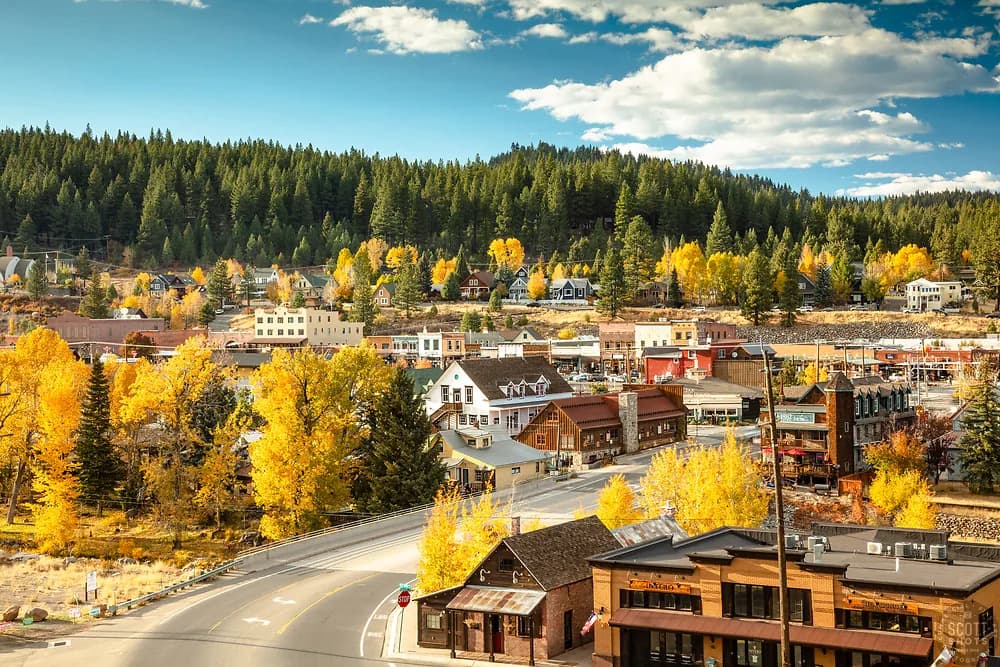

Collect three Truckee management quotes and they will look nothing alike. Underneath, they are usually much closer than that. Two are quoting a management fee, and the third has folded snow removal, the fire inspection and the quarterly tax filing into a single number. Line the pieces up and the gap shrinks. Below is what each piece is, and which parts the Town of Truckee sets at a price nobody gets to discount.
What does a management fee actually buy?
A management fee buys labor and systems. Listing your home across booking channels, pricing it night by night, answering a guest at eleven on a Saturday, scheduling the turn, keeping the Town paperwork current. For a short-term rental it is charged as a percentage of what the home earns.
Everything else is the cost of owning a house in snow country and renting it to strangers. Cleaners get paid. The plow contractor gets paid. The Town gets $428. The fire district gets $500 every third year. Your guest pays a 14% levy that you collect and hand over on a quarterly return. None of that is management. All of it shows up on your owner statement.
Miss that split and you will chase the lowest headline percentage straight into the biggest pass-through markups. It is an expensive mistake, and avoiding it costs nothing. Ask what the percentage covers before you ask what the percentage is.
Which fee model are you being offered?
Almost every Truckee quote uses one of four structures. The structure tells you more than the number attached to it, because each one moves risk between you and the manager in a different direction:
Commission
A percentage of what the home earns. The default for Truckee short-term rentals, because a manager who earns nothing in a slow October has a reason to go fix October.
Flat Fee
A fixed monthly amount whatever the home earns. Predictable to budget. It also pays the manager the same in a sold-out holiday week as in mud season.
Guaranteed Income
The manager pays you a set amount and keeps whatever the home makes above it. Your risk goes away. So does the upside of a big snow year, which in Truckee is where the money is.
Hybrid
A smaller base fee plus a share of performance. Reasonable in principle. Read the split terms twice, because that is where a hybrid quote hides its real price.
Commission dominates here, and it should. A Truckee home makes a large share of its year in a handful of weeks, so you want the person pricing a Presidents’ Day weekend paid on how that week lands rather than paid the same either way. A flat fee reverses that. The same trade-off is worked through in more depth in the Lake Tahoe fee-structure guide.
What does the Town of Truckee charge before a guest ever books?
Truckee is an expensive small town to hold a short-term rental in. The one mercy is that the fees are published and identical for everybody. No manager can discount them. None should be marking them up, either. What follows is what the Town published as of August 2026.
| Cost | Amount | Detail |
|---|---|---|
| STR registration (initial) | $428 | $100 non-refundable waitlist deposit plus a $328 balance (Town fees & penalties) |
| Annual renewal | $428 / year | Renewal window runs November 1 to December 31 (Town renewal process) |
| Fire safety inspection | $500 | Once every three years through the fire district; $300 more if the home fails and needs a re-inspection (Truckee Fire Protection District) |
| Transient occupancy tax | 12% | 10% base plus 2% Measure K; collected from the guest, remitted quarterly |
| TTBID tourism assessment | 2% | Raised from 1.25% on July 1, 2026, bringing the all-in guest levy to 14% (Town TOT page) |
Two rows in that table trip owners up. The renewal window is November 1 through December 31, the same eight weeks you are trying to fill Christmas and New Year. Miss it and you are not renewing a certificate. You are joining a line.
The line is not short. The cap is 1,255 certificates town-wide, it is full, and the Town’s waitlist standings showed 313 names waiting when they were last refreshed on August 12, 2026. A registration does not travel with the house when it sells, either. How long a waitlist position takes to clear is the question every buyer asks, and it is the one to be most careful about: ask Town staff what they have actually been seeing, and treat any manager’s confident answer with suspicion. The full Truckee regulations guide walks through the waitlist mechanics.
Budget the renewal loosely, because the Town’s own two pages disagree. The fee schedule says $428 per calendar year. The annual renewal page still shows $543.33, which looks like the older bundled figure: the Town moved the fire inspection fee out of the renewal fee on January 1, 2026, so it is now paid to the fire district directly. Ask the Town what your renewal will actually cost rather than assuming either number.
The fire inspection is the figure that has moved most, and older guides on the web still quote a much smaller figure from a previous fee schedule. Both the fire district and the Town now publish $500 for a short-term rental inspection under the district’s 2026 fee schedule. A re-inspection adds $300. The Town also notes the inspection calendar will run May 1 to November 1 starting in 2027, so February is not when you sort this out. Budget from the current schedule, not from an old blog post.
Snow is a line item, not a season
This is the cost owners underestimate, and they underestimate it in a specific way. They budget the driveway and forget everything else.
The Town’s winter parking ban runs November 1 through April 30 on Town roads and rights-of-way, and the short-term rental rules separately require on-site paved parking, with no street or unpaved parking permitted. Those same rules put a bear bin and weekly two-bin garbage service at every rental. Put it together and the driveway stops being optional. It has to be clear at four on a Friday afternoon in a storm, not Monday, when your contractor reaches your street on his usual route.
Priority plow service costs more than standby service. Pay for it. Over one Truckee winter that difference is real money, and it is the line most quotes leave vaguest.
A manager who cannot tell you who plows your street, how soon after a storm they reach it, and what counts as a second visit will hand that problem back to you in January. Ask before you sign. Our winterizing guide covers the physical preparation side of the same problem.
What falls outside the management fee?
Here is the list in full. Some managers bundle one or two. Most bundle none. The honest ones tell you which without being asked twice:
Press hardest on that last line. A manager who adds a quiet percentage to every vendor invoice can advertise a lower headline rate and still cost you more across a snowy winter, because a snowy winter is when the invoices pile up. Duvoire does not mark up maintenance costs. Ask everyone you talk to whether they do, and get the answer in the agreement rather than in a phone call.
Why does a Truckee home cost more to run than a Reno one?
Own a home on each side of the state line and the two owner statements will not look like they belong to the same business. The management fee is rarely the reason. The house is:
| Truckee | Reno | |
|---|---|---|
| Permission to operate | Registration certificate capped at 1,255 town-wide, currently full, allocated by waitlist | A separate city and county permit process with its own rules (Reno and Washoe County guide) |
| Guest tax | 14% inside town limits, filed quarterly with the Town | Nevada lodging tax at a different rate on a different filing calendar |
| Fire inspection | $500 through the fire district, once every three years, plus defensible space | Handled through the county permit process on its own terms |
| Winter operations | A plow contract, berm clearing, roof and ice work, freeze protection, roughly November to April | Real winter costs, but no season-long plow contract and no snow storage problem |
| Demand pattern | Built around the ski calendar, with a second season in summer | Driven by events, conventions and business travel rather than snow |
Read the Reno cost guide alongside this one if you own on both sides. The fee models are the same. The operating cost base is not close.
The revenue side runs on a ski calendar
Costs are only half of the arithmetic. Truckee demand is not spread evenly across twelve months, and no honest projection will pretend otherwise. Holiday weeks and good snow carry the year. Mud season, the stretch between the lifts closing and the trails drying out, is as quiet as it sounds. Summer is a genuine second season and deserves to be priced like one.
Never accept a revenue projection as a single number. Ask which comparable homes it came from, what occupancy it assumes, and whether the figure is gross booking revenue or what actually reaches your bank after channel fees, cleaning and tax. Those are very different numbers. The gap between them is where owners get disappointed twelve months later.
Nine questions to ask any Truckee manager
Take this list to every company you interview. Their answers, not their headline percentage, are what make two quotes comparable:
- Is the fee charged on gross booking revenue, or on what reaches me after platform fees?
- What does the percentage cover, line by line, and what falls outside it?
- Who plows, how soon after a storm do they reach my house, and is berm clearing a separate visit?
- Do you mark up maintenance, vendor invoices, or snow removal? By how much?
- Is cleaning billed to me or collected from the guest as a fee?
- Do you file the quarterly TOT and TTBID return, or do I? Who is liable if it is late?
- Do you handle the registration renewal inside the November-to-December window, and who pays the $428?
- Who schedules and pays for the fire district inspection, and what happens if the home fails it?
- Is there a contract term, and what does it cost me to leave?
Question four is the one to listen hardest for. Question six is the one that costs the most when it is answered vaguely, because the Town expects a return every quarter whether or not the home booked a single night.
The only real number is a written quote for your house
Two homes on the same Truckee street can cost very different amounts to run. One has a flat paved driveway, no spa, and a roof that sheds away from the walkway. The other needs a smaller machine on a steep drive, has a hot tub on weekly service, and drops a load of snow across the path guests use. Same neighborhood, same square footage, nowhere near the same operating cost.
That is why Duvoire quotes each property in writing after looking at it rather than publishing a rate. A percentage offered before anyone has seen your home is a marketing number, not a price. Treat it as one. The Truckee property management page covers what our local team handles, and the Truckee area page covers the neighborhoods we work in.
One thing to settle before you budget from any figure above. A Truckee mailing address is not the same as a Truckee address. Plenty of homes carrying one sit outside Town limits, in unincorporated Nevada County or in Placer County, where the tax rate and the permit program are both different.
On Placer’s eastern slope, the county publishes a 10% transient occupancy tax plus a North Lake Tahoe tourism assessment of 1% or 2% depending on which zone the property falls in (Placer County TOT rates). If you are not sure which jurisdiction your parcel sits in, call and find out. Do not assume. Rates and rules in this corner of California move often, so treat every figure here as accurate to August 2026 and check the agency page before you write a check.
Frequently Asked Questions
How much does Airbnb management cost in Truckee?
There is no published rate, because Truckee vacation rental management is priced by model and by property. Short-term management is normally charged as a commission on what the home earns. What differs between two quotes is usually not the percentage but what the percentage covers, and how the operating costs are billed on top of it: snow removal, cleaning, hot tub service, the Town registration and the quarterly tax return. Ask for a written, itemized quote for your specific home.
What does the Town of Truckee charge to register a short-term rental?
The Town of Truckee charges $428 for an STR registration: a $100 non-refundable waitlist deposit plus a $328 balance. The Town fee schedule lists renewal at $428 per calendar year, and the renewal window runs November 1 through December 31. Confirm the amount when you renew, because the Town still lists a higher figure of $543.33 on its annual renewal page, which appears to predate the January 1, 2026 change that moved the fire inspection fee out of the renewal fee. The Town also caps registration certificates at 1,255 town-wide, and that cap is full, so new registrations come through a waitlist. Figures as published by the Town of Truckee in August 2026.
What tax do guests pay on a Truckee short-term rental?
Inside Town of Truckee limits, guests pay a 14% combined levy: 12% transient occupancy tax plus a 2% Truckee Tourism Business Improvement District assessment, which rose from 1.25% on July 1, 2026. The operator collects it and files a quarterly return with the Town whether or not the home booked that quarter. If the parcel sits outside Town limits, in unincorporated Nevada County or in Placer County, a different rate applies.
Why does managing a Truckee rental cost more than managing a Reno rental?
The management fee is not usually what differs. The house is. A Truckee short-term rental carries snow removal from roughly November through April, a fire district inspection of $500 every three years, a $428 annual registration, bear-proof trash service, and often a hot tub. A Reno rental carries none of those. Expect a Truckee owner statement to have more lines on it and to swing harder from month to month.
Does Duvoire publish its management rates for Truckee?
No. Two homes on the same street can cost very different amounts to run, so Duvoire quotes each property individually and in writing after looking at the home, with no markup on maintenance costs. The property analysis is free, and you can request one at (775) 200-1742.
Want a Real Number for Your Truckee Home?
A free property analysis first, then a written quote for your home. No markup on maintenance costs.

Founder & CEO, Duvoire Property Management
Michael is a Reno-Tahoe property owner and hospitality expert who founded Duvoire to bring institutional-grade management with a personal, local touch to every property in the region. He writes about vacation rental strategy, market trends, and property investment across the Sierra Nevada.
View full profile