
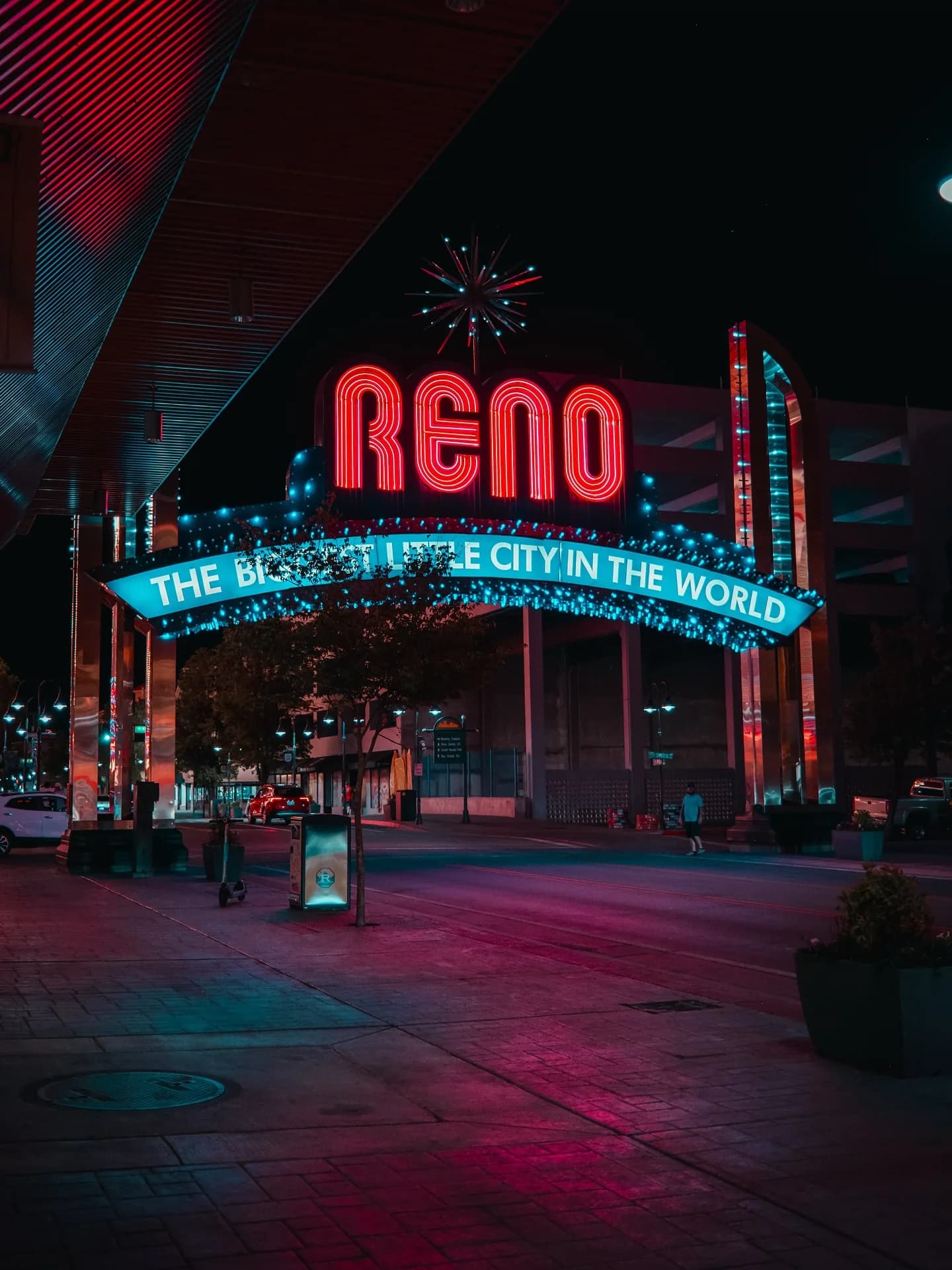

Before you list a property on Airbnb or Vrbo in the Reno-Tahoe region, the first question is not how to get a short-term rental (STR) permit. It is whether your address can get one at all. Unincorporated Washoe County, which includes Incline Village, requires one. Reno and Sparks are a different situation: the county cannot permit a property inside either city, the City of Reno runs no STR permit program of its own, and no City of Sparks program is published. This guide walks through who actually needs a permit, what to file, what it costs, how long approval takes, and what applies instead when no permit exists.
Do I need a permit to run a short-term rental in Washoe County?
In unincorporated Washoe County, yes, and the obligation starts earlier than most owners expect. The county requires a valid permit before you advertise, not merely before your first guest arrives, and operating without one is unlawful and declared a public nuisance. A short-term rental here means a stay of less than 28 days.
But the permit exists for unincorporated areas only. Washoe County states it in terms: if your property is within the City of Reno or the City of Sparks, you cannot obtain a county permit, because the county has no jurisdiction over either city. So the first step is not the application. It is confirming which jurisdiction your parcel physically sits in, because for a great many Reno addresses the answer is that there is no permit to apply for at all.
Which agency issues my STR permit?
The agency depends on where the property physically sits, not your mailing address. Use the jurisdiction below as your starting point:
- City of Reno business licensing
- No city STR permit program
- Exempt from city business license
- RSCVA room tax license still required
- City of Sparks business licensing
- No county permit available here
- No published city STR program
- Call the city to confirm your address
- Washoe County Community Services
- Includes Incline Village
- Tahoe fire-safety rules apply
What documents do I need to apply?
Plan to gather proof of ownership, property details, and a responsible local contact before you start the application. Requirements vary slightly by jurisdiction, but most applications ask for the following:
Proof of Ownership
A deed or property tax record showing you own the home, plus authorization if you are applying on behalf of an owner.
Floor Plan & Parking Plan
A simple diagram showing bedrooms, sleeping areas, and the number of off-street parking spaces available.
Designated Local Contact
A person who can respond to issues quickly: often required to be reachable within a set number of minutes and located near the property.
Proof of Insurance
Liability coverage appropriate for short-term rental use, with limits that meet the jurisdiction’s minimum.
Safety Compliance
Working smoke and carbon-monoxide detectors, fire extinguishers, and (for Tahoe-area homes) defensible-space compliance.
What is the step-by-step application process?
The process follows a predictable path: confirm eligibility, submit a complete application, pass inspection, and receive your permit number. Here is the typical sequence:
- Confirm the parcel is actually in unincorporated Washoe County: If it sits inside Reno or Sparks city limits, there is no county permit to apply for and the rest of this list does not apply to you.
- Confirm zoning and HOA rules: Verify the property is in a zone where short-term rentals are allowed and that your CC&Rs do not prohibit them.
- Get your RSCVA transient lodging tax number: The county application asks for it, so this comes first rather than last. The license itself is free.
- Submit the STR permit application: Provide a scaled site plan and floor plan, proof of current property tax payment, your local responsible party's contact details, evidence of insurance, and a notarized owner certification.
- Pass the physical inspection: An inspection must be passed before the initial permit is issued. Annual renewals may use a self-certification checklist instead.
- Receive your permit number: Once approved, the permit number and tax number must appear at the top of every listing, and the permit must be in hand before you advertise at all.
How much does a Washoe County STR permit cost?
Costs vary by jurisdiction and are updated periodically, so treat any figure you read online as a starting point and confirm the current schedule directly with the issuing agency. When budgeting, account for several separate line items rather than a single fee:
Always verify current fees
Permit fees, renewal cycles, and tax rates change. Confirm the latest figures with the City of Reno, City of Sparks, or Washoe County Community Services Department before you apply or budget.
How long does the permit process take?
Plan for several weeks from a complete application to an issued permit. The clock depends on how quickly you provide documents, how busy the agency is, inspection scheduling, and any neighbor-notification window. Submitting an incomplete application is the most common cause of delay, so it pays to get every document right the first time, or to have a manager handle it for you.
What happens after you are approved?
Approval is the beginning of ongoing compliance, not the end. Once your permit is issued, you must keep operating within the rules to keep it:
For a deeper look at the rules behind the permit, taxes, occupancy limits, and enforcement, see our companion guide to Reno & Washoe County STR regulations. If you also own across the state line, our Truckee STR regulations guide covers California’s VHR permit process.
Official Resources
- Washoe County Short Term Rentals (permits, renewals & inspections)
- City of Reno Business Licensing
- City of Sparks Business Licensing
- Nevada Department of Taxation: Lodging Tax
Frequently Asked Questions
Do I need a permit to run a short-term rental in Washoe County?
In unincorporated Washoe County, yes: a short-term rental permit is required before you advertise, not merely before your first guest, and operating without one is unlawful and treated as a public nuisance. But the permit is available for unincorporated areas only. The county states plainly that if your property is inside the City of Reno or the City of Sparks, you cannot obtain one, because it has no jurisdiction there.
Which agency issues my short-term rental permit?
Washoe County Planning and Building, and only for properties in unincorporated Washoe County, which includes Incline Village and Crystal Bay. Properties inside Reno or Sparks city limits are a different situation entirely: the City of Reno has no short-term rental permit program as of August 2026, and no City of Sparks program is published. What all three share is the transient lodging tax license issued by the Reno-Sparks Convention and Visitors Authority.
How long does it take to get a Washoe County STR permit?
Most applicants should plan for several weeks from a complete application to approval. Timelines vary with inspection scheduling, neighbor notification windows, and how quickly you supply required documents, so apply well before your first intended booking.
How much does a short-term rental permit cost in the Reno area?
Only unincorporated Washoe County charges a short-term rental permit fee, and it is higher than the figures circulating in third-party guides: budget for the permit itself plus the required inspection, and expect renewals to cost less than the initial application. Note that Washoe County does not require a separate county business license for a short-term rental; it classifies them as a residential use. Always confirm the current fee schedule directly with Washoe County before applying, since it is revised periodically.
Can my HOA stop me from getting a short-term rental permit?
Yes. Even where the county would issue a permit, or where no permit is required at all, your HOA or CC&Rs can prohibit short-term rentals outright, and an HOA sets its own minimum-stay line rather than following the county’s. Always confirm your HOA rules before you list, especially in condo complexes around Reno, Sparks, and Incline Village.
Let us handle the paperwork
Permitting is one of the most time-consuming parts of self-managing a rental. Our short-term rental management handles permit applications, renewals, and tax remittance, and we can serve as your required local contact across the Reno-Tahoe region.
Need Help with Your STR Permit?
We handle permits, licensing, and taxes so you can start booking sooner.
Founder & CEO, Duvoire Property Management
Michael is a Reno-Tahoe property owner and hospitality expert who founded Duvoire to bring institutional-grade management with a personal, local touch to every property in the region. He writes about vacation rental strategy, market trends, and property investment across the Sierra Nevada.
View full profile